

Product analysis · Campaign experience
DM a GM
The brief was visual. The unresolved questions weren't.
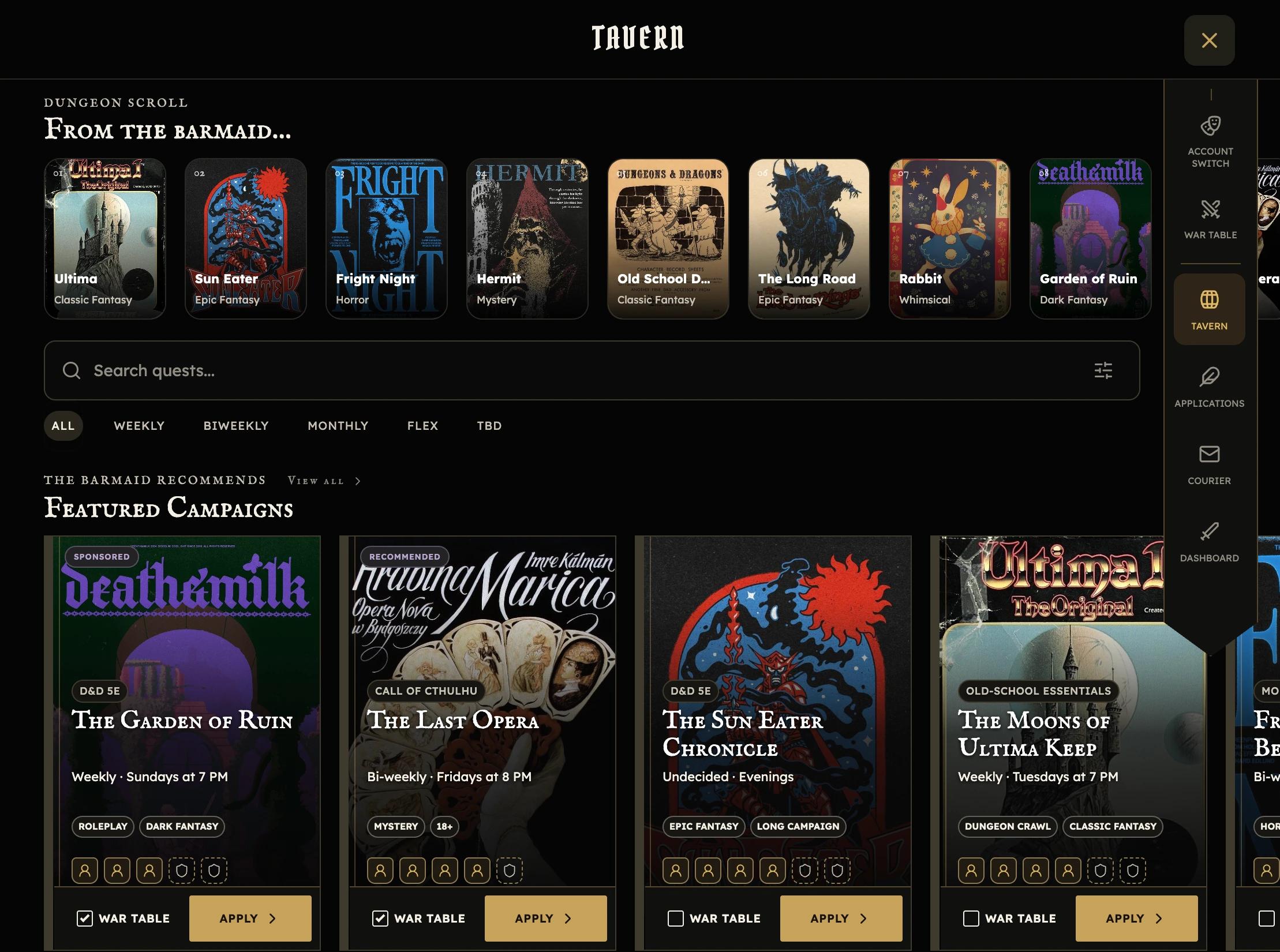
A tabletop campaign platform whose design grew from an interface assignment into research planning, product architecture, and the work of helping people form and sustain a table.
What do people need to decide before they can play together?
The questions changed the assignment.
The original request was to improve an existing interface. Mapping what players would need to evaluate campaigns exposed questions a visual layer couldn’t settle: fit, schedule, expectations, and the effort of comparing inconsistent listings. Evaluation became central to the product.
An invitation becomes an active table.
The GM's work moves through distinct stages: author the invitation, form the party, run the active campaign, and care for the roster. Writing the actual game remains outside the product's scope. The interface needs to support each operational stage without becoming campaign-preparation software.
A schedule is a commitment.
The August design discussion clarified authority: the GM sets a session and players decide whether they can participate. Confirming the usual next session and proposing a change are different actions. Their consequences need to be visible in the Dashboard and the player's Notice Board.
The Project That Was Supposed to Be Made Pretty
I was asked to make an interface look pretty. Trying to make it coherent exposed unresolved questions about the product itself. A screen I used to think with could be read as an instruction to build. The difficulty of keeping that distinction visible led me to write Chain of Authorship.