

“Make it look pretty.”
I still remember being told that after being hired as a UX/UI designer.
I’d started questioning why so many people — non-designers and designers alike — seem to hear “design” in a job title or a practice and immediately think of aesthetics. Visuals. Making something look good.
Then I ran straight into that assumption on DM a GM.
The Idea Sounded Pretty Cool
The founder is someone I’m good friends with, and someone I’d worked for before. He hired me as a UX/UI designer. When I asked what my task was — what I actually needed to complete — he told me that he and his developer already had the app’s backend coded and ready to go.
He told me, “the backend is already done and the app screens are all designed, I just need you to redesign them.” And: “make it look pretty.” Those were his words. The supplied screens and planning material were work the team had done before I was hired.
The initial idea sounded pretty cool to me: Tinder-style swiping and the quick, doom-scrolling rhythm of TikTok or Instagram Reels, applied to finding and hosting tabletop role-playing campaigns.
I could see why that might be appealing. Finding a game, finding people to play with, getting a sense of whether a campaign interests you — there was something there I wanted to explore.
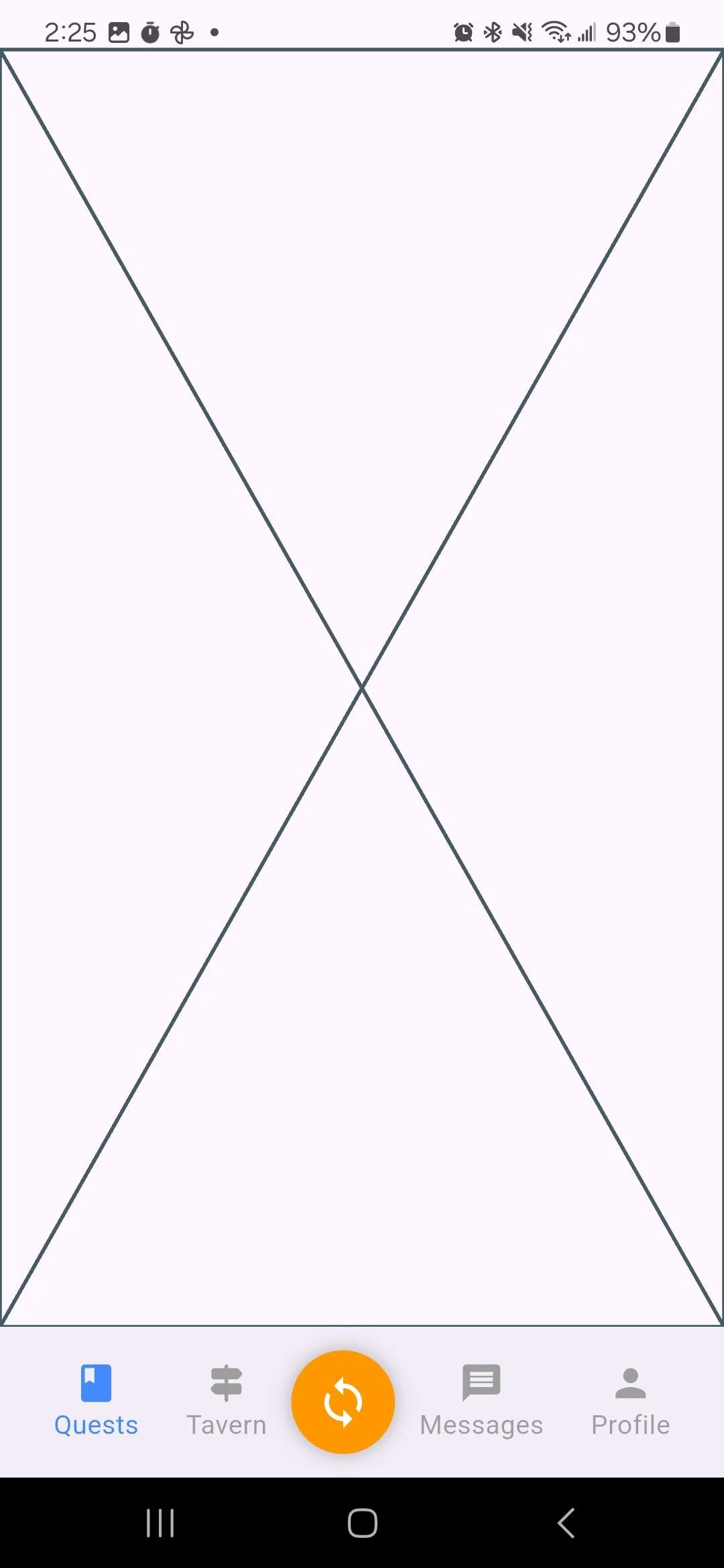
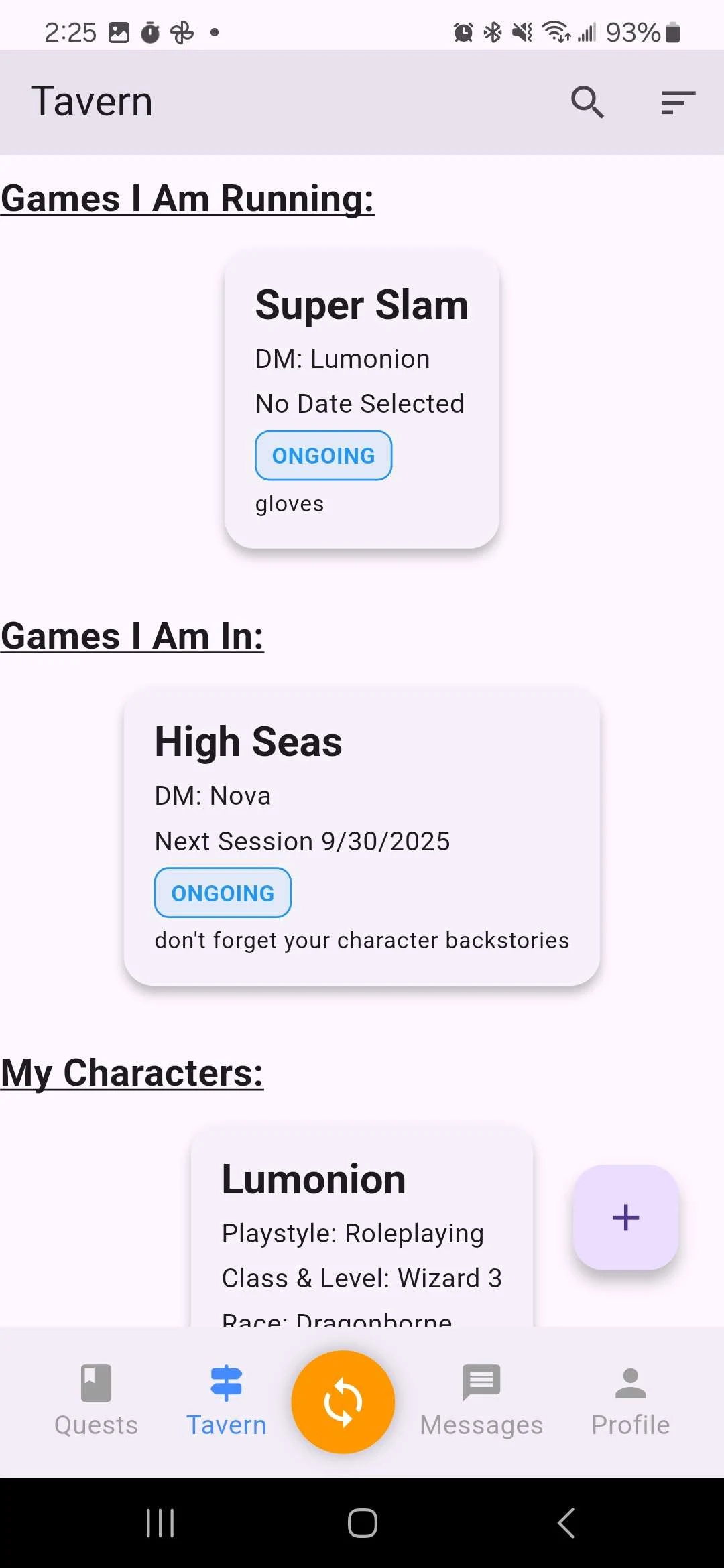
The Quests and Tavern screens the founder showed me as the starting point for the redesign. These were made before I was hired; they are not my design work.
Then I started designing the UI
I started designing because I thought the scope was solid. I understood the assignment as a “redesign”: the backend was done, the screens were designed, and I was being paid to rework the interface.
That was what I thought I’d be doing, and what I understood I was paid to do.
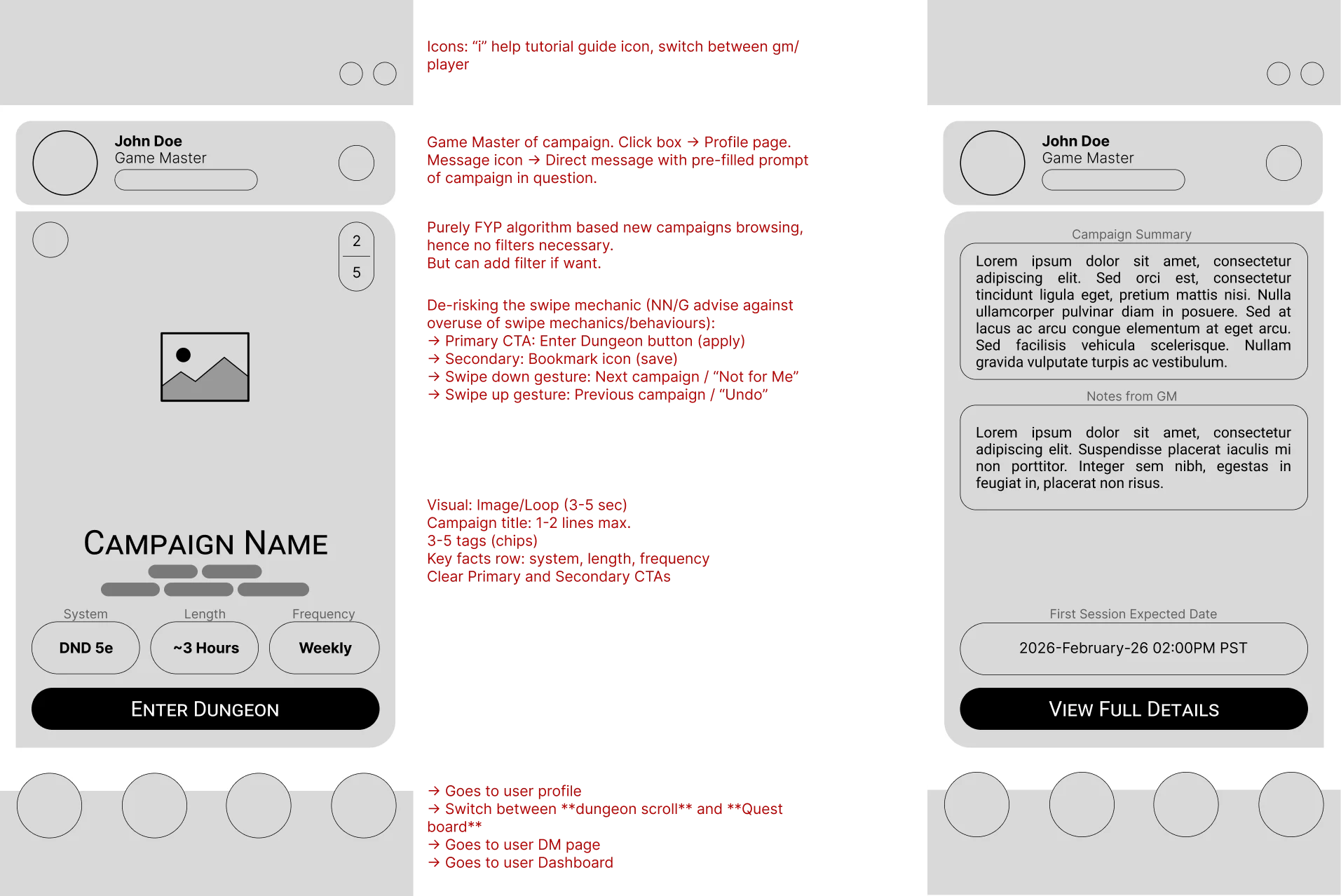
But once I started making the low-fidelity screens, I kept getting stuck. You can see it in the red annotations: questions, notes, attempts to work out what an interaction meant or what should happen next. I kept asking the founder for clarification as I designed. This was before I undertook the broader TTRPG community research.
What had been described as a redesign was turning into a full design effort. I was having to figure out the experience itself.
My early low-fidelity screens. I began with what I understood to be a settled redesign scope; the red annotations show the questions and interaction decisions that surfaced as I tried to make it work. These explorations preceded the broader community research.
I Ended Up Doing The Research Too
There was no budget to invest in user interviews or surveys, so I took on the UX research portion myself. I started getting deeper into the TTRPG community and culture to gain insights into how people found, joined, and hosted campaigns.
Credible research relevant to those questions was difficult to find. I had to keep investigating while also trying to move the design forward.
That doesn’t mean community observations gave me all the answers, or that they replaced interviews and surveys. They helped me understand more of the context. They also exposed more things I still didn’t know.
What initially sounded like a visual-design task kept pulling me into the reasoning underneath it.
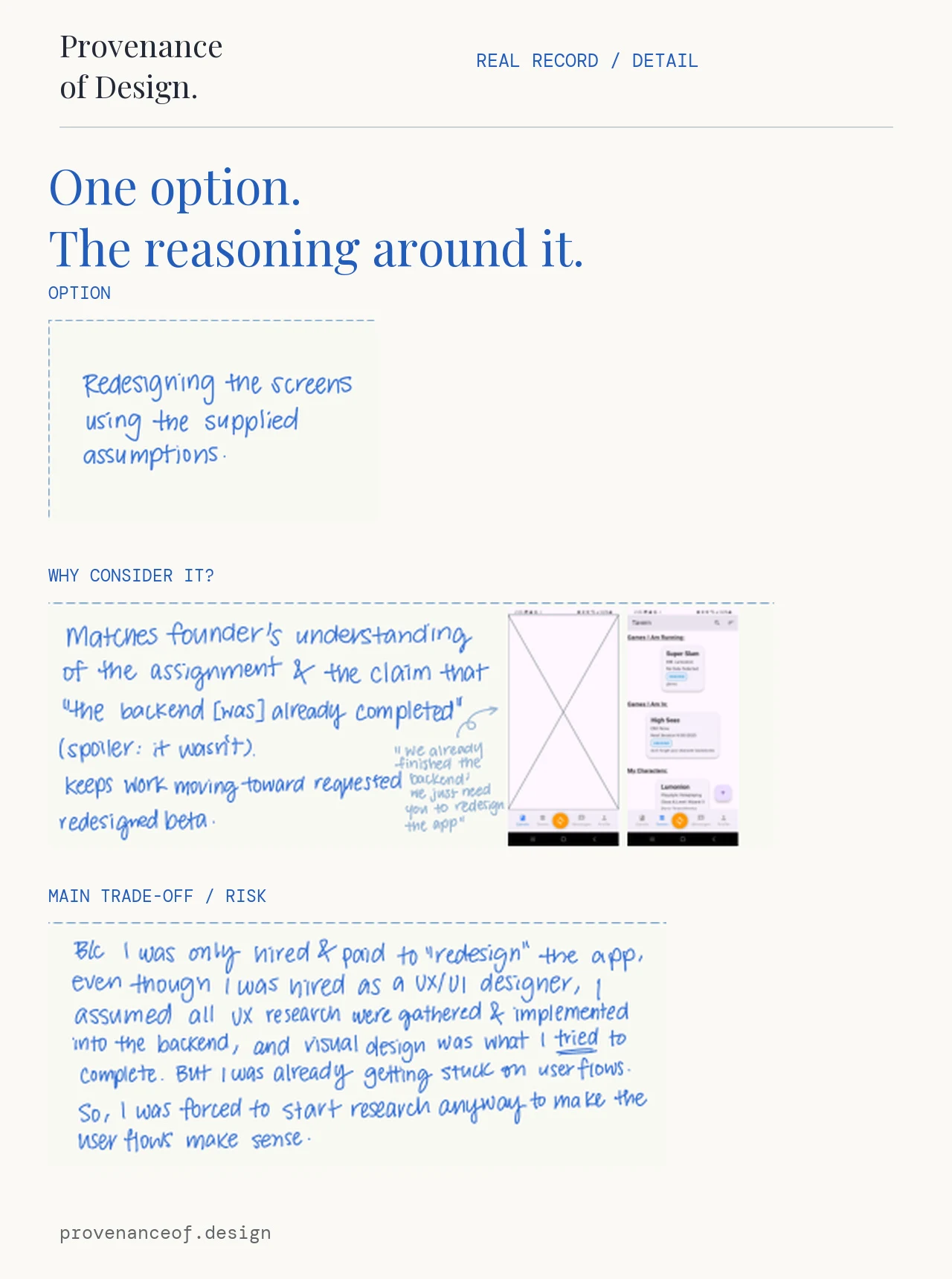
A detail from my real DM a GM decision record, written retrospectively. It records the supplied assumptions I started with and how getting stuck in the flows pushed me into research.
Why “Provenance”?
Provenance means the origins and history behind something. Where it came from. What shaped it.
That fits what I want my design practice to make visible.
A finished screen can show you what I made. But it won’t necessarily tell you which assumptions I started with, what I learned, what constrained the work, or why I changed direction. It won’t tell you which questions remained unanswered either.
Those things are part of the design. I want to keep them attached to the work.
That’s part of why I chose Provenance of Design as the name of my practice. The name gives me a way to talk about the history behind the finished thing: the observations, research, decisions, revisions, and uncertainties that shaped it.
I liked the original DM a GM idea. I wanted to make it work. The questions came from trying to design it.
And that experience stayed with me, because it made the gap between “make it look pretty” and the actual work very clear.
I want people to see how a design came to be.