


After graduating from post-secondary school, I expected to apply for entry-level positions in my fields and work a nine-to-five every weekday.
Instead, my graduation happened online as COVID restrictions were lifting. I had to quit my part-time UI/UX design job, which I’d started as an intern in my final year of university, to work for my family. Basically for free.
For my first two or three years at Ballistic, I was the cashier, customer service representative, janitor, admin, digital marketing manager—with no practical idea of what to do—graphic designer, logo designer, and website designer. I was wearing all of those hats alone.
The logo came first, while I was close to graduating. All I had to go on was the official business name, “Ballistic Indoor Screen Golf,” and my mom’s request: she wanted a golf ball shooting up into the sky. These are the designs I came up with.
I made the second version for places that needed an equally proportioned logo or icon. The first carried the upward motion; the second kept the golf ball in a compact shape.


I also designed the storefront signage. The photo beside the title is the very first picture I took of Ballistic, on the first day we opened after construction. Something I’d designed was now part of a physical place.
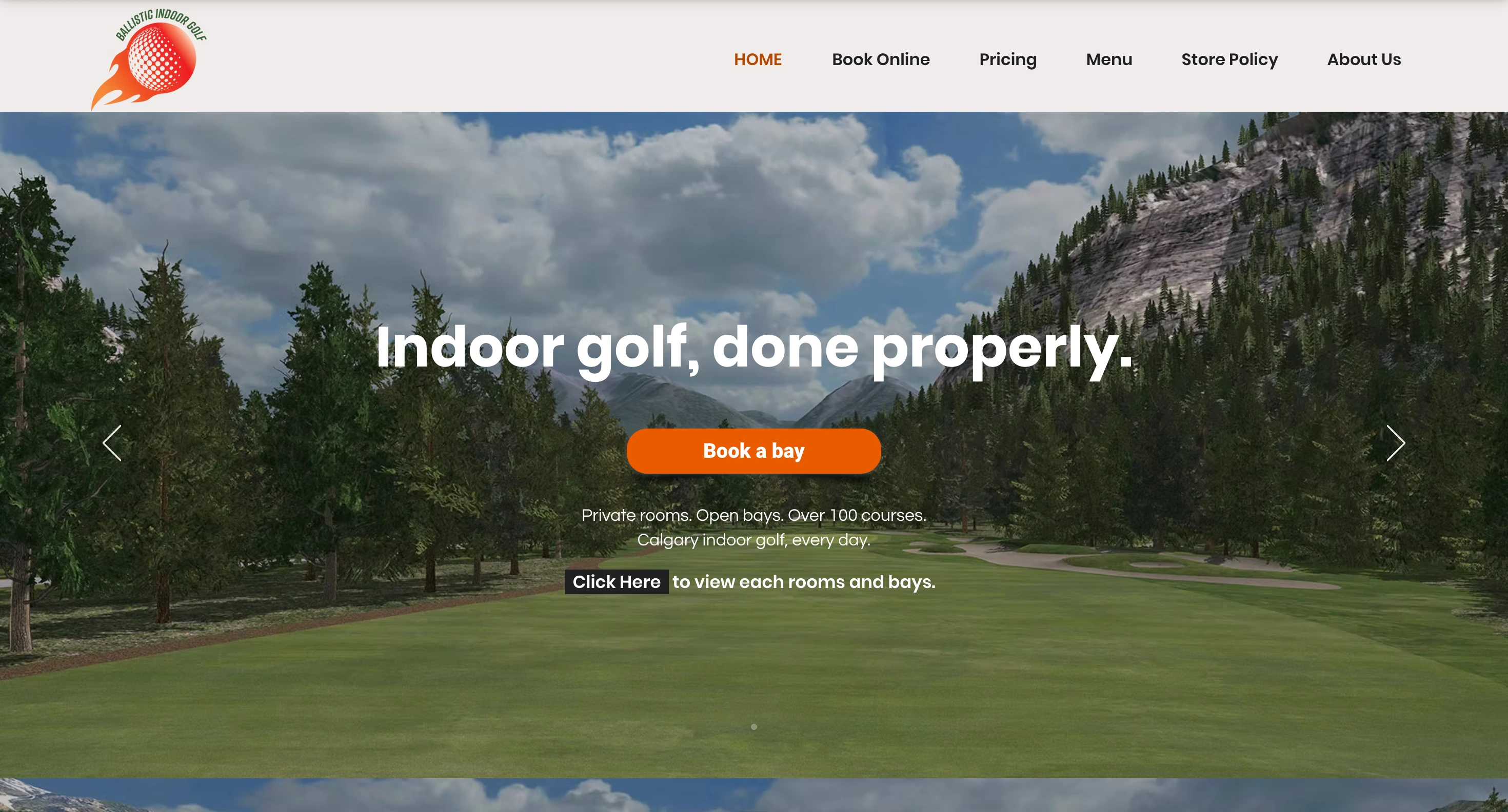
Then there was the website. I hadn’t used Wix before, and I’d never built a real business website. I learned the platform while designing, publishing, and managing the site. The screenshot below shows how that Wix site looked just before the recent redesign, after the updates it received along the way.
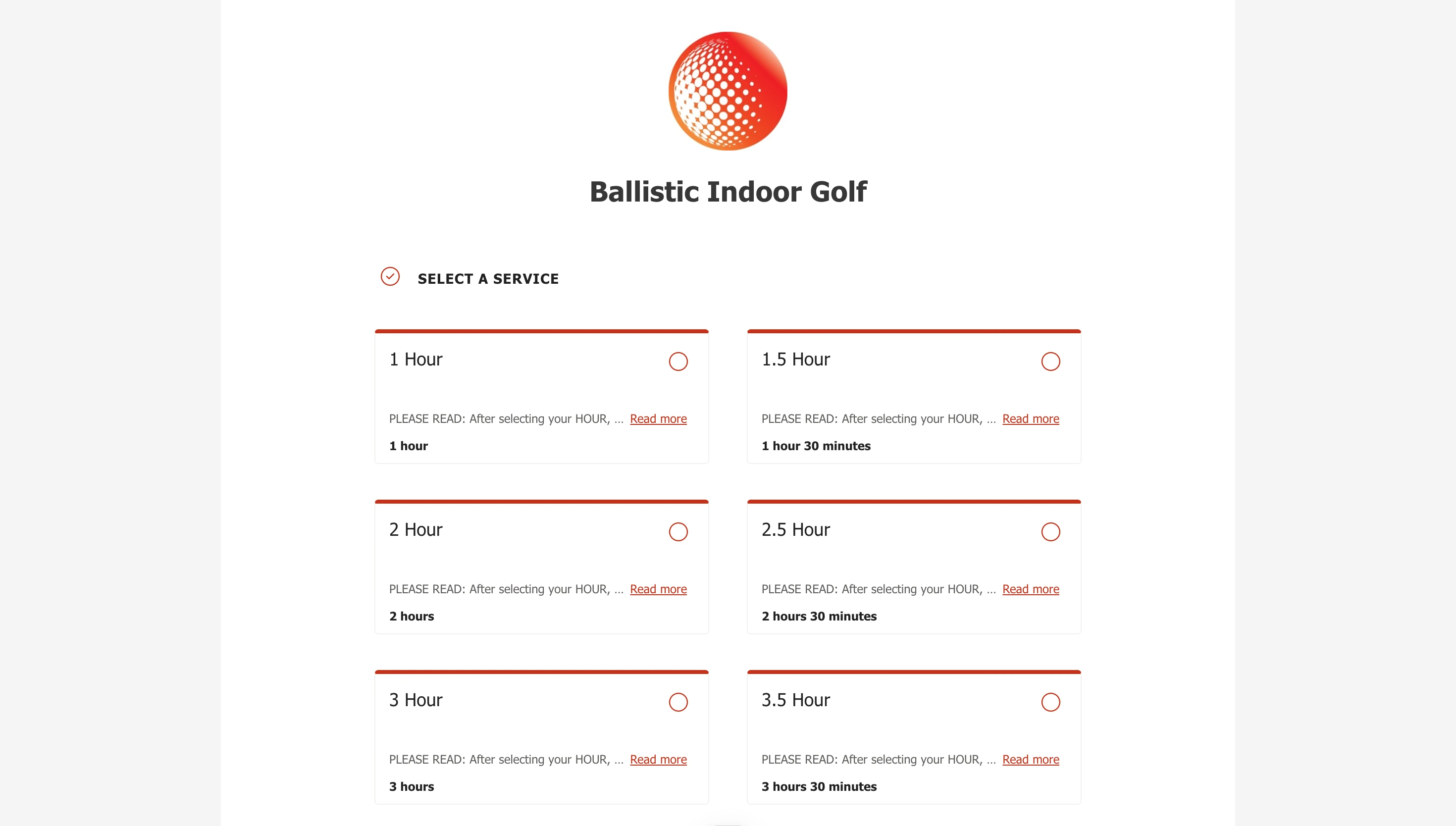
I also had to find a booking platform that actually worked for us. Of the options I looked at, Microsoft Bookings was the cheapest and the only one that solved our main pain points. I configured the customer-facing booking form shown here.
Apart from SuperSaaS and Microsoft Bookings, the other platforms I looked at seemed built around services with predetermined, approximate durations, such as spa or salon appointments. They didn’t fit the live, day-to-day operations we needed to manage. Choosing a platform meant looking past whether it could accept a booking and asking whether it could work for this business.
I would’ve loved to work with other people. Instead, I was responsible for the visual identity, the website, and communicating what the business offered, while having limited—often effectively no—authority over business decisions.
That was where brand strategy became difficult. I could design how the business presented itself, but I couldn’t decide how it operated. Most of my ideas about how the system should operate had been rejected. Most of what you might see on the old website was dictated by my family. There was a limit to what I could change through a logo or a website when the decisions behind them were outside my control.
What discouraged me wasn’t a lack of interest in design. It was being asked to carry so many parts of the work without having much say in the decisions that shaped it. When problems kept coming up, solutions I’d already suggested often seemed to have been forgotten. I couldn’t tell whether they’d been forgotten or whether I’d been heard in the first place.
Those early days taught me Wix, website design, and logo design. They also taught me something harder about brand identity and strategy: being responsible for making a business understandable doesn’t mean you have the authority to make its decisions coherent.